
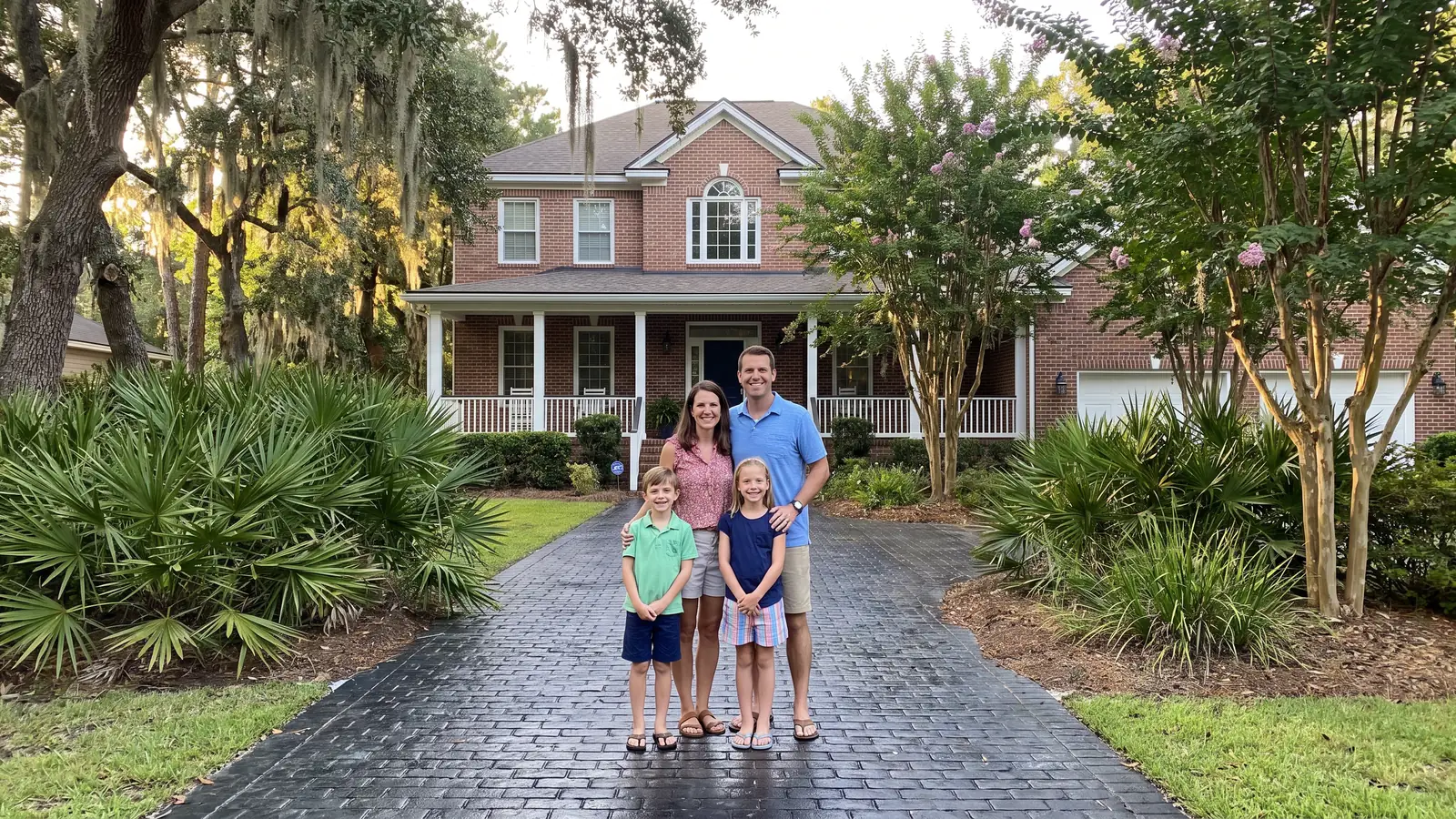
Paver sealing for Brunswick homes
Paver Sealing in Brunswick, GA
Old Town squares, live oaks and low river ground shape Brunswick pavers: call (912) 600-8118 for a free sealing estimate.
- Brings out deeper paver color
- Fresh joint sand helps lock pavers in place
- Gives weeds less room to grow
- Makes the surface easier to keep clean
- Free estimate, no obligation
Request a Free Estimate
Free, no obligation.
Fast, careful paver sealing in Brunswick
Brunswick homeowners can get paver sealing priced for free. The contractor washes the surface, refills the joints with sand and seals the pavers, whether it is a driveway, porch, walk or pool deck. Request a visit with ask for a free estimate, and you will hear back within 1 business day, usually much sooner.
Suppose the edge of your driveway under the live oak has turned green and the joints are low on sand. One clean, even surface is what comes back once it is washed, refilled and sealed. To talk it over first, call (912) 600-8118.
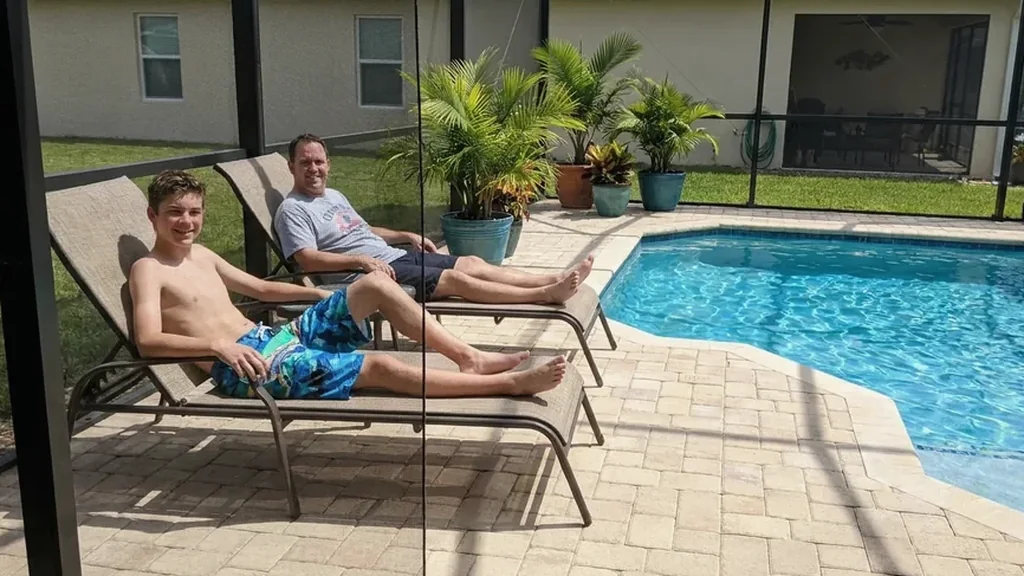
Why hire a local paver sealing contractor in Brunswick?
Brunswick is flat, close to the water and wet in summer, and each of those facts changes when and how pavers should be sealed. A local contractor already plans for it, and you can ask for a free estimate to hear the plan for your street.
See it, then price it
The contractor looks at your Brunswick pavers in person and quotes afterward. The visit costs nothing and you owe nothing.
Humidity-aware scheduling
Mornings here run damp, so Brunswick jobs often seal in the afternoon. Ask the contractor how the day will go.
Calm or glossy
Matte looks quiet beside Old Town porches and brick. A wet look shows scuffs sooner, which matters on a daily driveway.
Your call, always
You pick the date and the finish. You can also say no once you see the numbers.
Get Your Free Estimate in Brunswick
Tell us about your pavers in Brunswick.
Free, no obligation
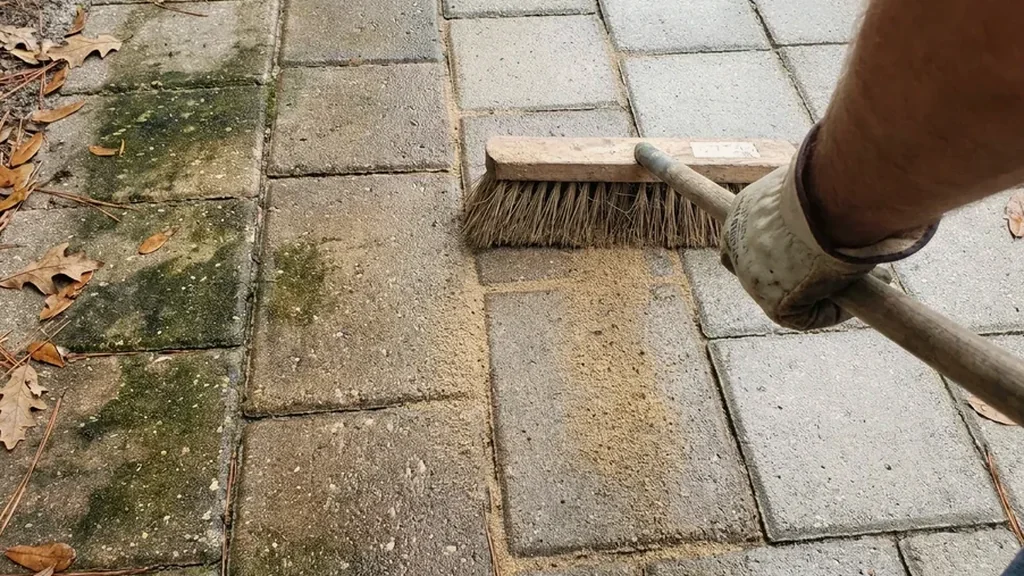
What paver problems show up most in Brunswick?
Damp mornings
Brunswick summer mornings average nearly 90 percent humidity, and afternoons drop to nearly 60 percent. That swing means dew can leave pavers damp well into the morning. Sealer needs a dry surface, so a contractor here often waits for the afternoon. If a job starts late, that is the reason, not a delay. A surface that looks dry at nine in the morning can still hold moisture in the joints. The contractor checks the joints by hand before the coat goes on. Fog or a damp morning can add to the wait, so a schedule that starts after lunch is not unusual. Porches and patios on the shaded side of a house stay damp longest.
Low ground and slow drainage
Brunswick is the lowest city in Georgia, at 10 to 14 feet above sea level, with rivers on three sides and salt marsh to the east. Flat ground sheds water slowly. A paver patio that sits a little low can stay wet long after a storm. Tell the contractor where water lingers on your lot. This is also why a quick wash can look fine and still hold water underneath. Ask the contractor to check the low corners twice. Patios built a little below the lawn are the usual trouble spots. Look at the low corners of your patio after the next storm, and tell the contractor where water lingers.
Live oaks and leaf stains
The Brunswick area is rich in southern live oaks, and Lover's Oak at Prince and Albany streets was about 900 years old in 2005. A Jacksonville exterior cleaning company lists leaf tannins from oaks among the stains a driveway collects. Shade also keeps pavers damp, and a landscape trade guide ties algae to heavy shade. If your Brunswick driveway sits under an oak, plan on the wash taking longer, and ask how often the leaves should be swept off between visits. Storms can also strip leaves from the oaks and drop them on the pavers. Roots near the trunk of a big oak are the usual cause.
Sand, storms and open joints
USDA describes sandy Coastal Plain soil across this region, and Brunswick gets about 49.6 inches of rain a year, with August and September the wettest. Hard rain can carry joint sand out. Open joints let soil in and give weeds room, so fresh sand is part of every job. The city has a 16-foot storm surge from the 1898 hurricane on record, which is why locals watch the forecast closely.
Roots and old coats
Big oaks can lift a paver section, and sealing over a lifted spot only preserves it. Older properties may also carry a sealer nobody remembers, and a solvent-based coat rules out a water-based one. The contractor checks both before choosing a product, so ask for that look at the estimate.
Should Old Town Brunswick pavers be sealed differently from the rest of the city?
Often, yes, because Old Town is a different kind of place. It was platted in 1771 on a grid with large public squares, and it joined the National Register of Historic Places in 1979. Hanover Square and Queen Square are two of those squares. Tell the contractor if your home is in the district when you ask for a free estimate.
Newcastle Street is the most intact historic commercial corridor, and the Richardsonian Romanesque city hall dates to 1889. Homes near these streets sit close together under mature trees. Gentle rinse water protects older brick and wood beside the pavers. Call (912) 600-8118 and describe the materials your house is built with.
Outside Old Town, Brunswick spreads along its peninsula, with the Torras Causeway to St. Simons Island and the port to the east. Newer streets may have larger driveways and fewer trees, which changes the price more than the method. Once you know your lot, ask for a free estimate and ask for a date. The Torras Causeway and the port keep traffic busy, so ask for a visit window that suits your street.
What does paver sealing cost in Brunswick?
What will it cost? Published prices from Northeast Florida companies run $1.75 to $3.25 per square foot to clean, sand and seal. In Brunswick the swing comes from green film, lost sand and the state of an old coat, and a failed coat adds the cost of stripping. For a number that fits your pavers, ask for a free estimate.
Old Town lots can be small, with several little patios instead of one big drive. Each area is measured and priced by the square foot, so many small areas can cost more time than one large one. Call (912) 600-8118 and the contractor can say what applies to your property.
| Paved area | Typical example | Clean, sand and seal |
|---|---|---|
| 300 sq ft | Small patio or walkway | $525 to $975 |
| 600 sq ft | Two car driveway | $1,050 to $1,950 |
| 1,000 sq ft | Large driveway or pool deck | $1,750 to $3,250 |
| 1,500 sq ft | Driveway plus pool deck | $2,625 to $4,875 |
Math based on the $1.75 to $3.25 per square foot that Northeast Florida paver companies published as of November 2026. Your contractor sets the actual price after seeing the surface. Repairs, leveling and stripping failed sealer are usually extra.
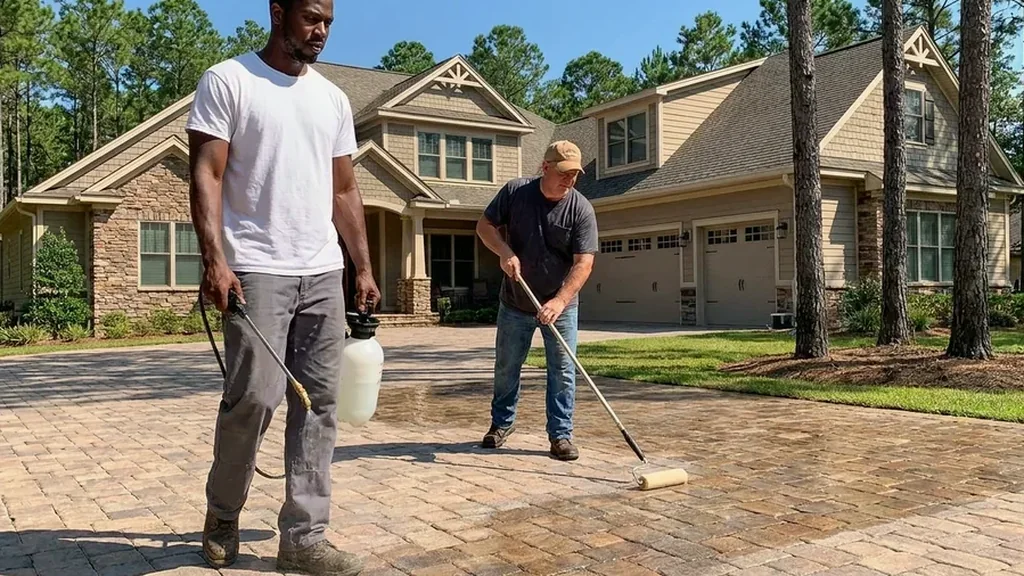
How does a paver sealing job work in Brunswick?
Check drainage and old coats
Water comes first. After a storm, where does it stand? Which corners sit in shade, and which spots has an oak root pushed up? The contractor also asks about any earlier coat, since a solvent-based one rules out a water-based product on top. In narrow Old Town side yards, the crew plans the route to the back patio too.
Wash away the green and the tannin
Dark leaf stain, green algae, oil and grime go first. Brick, wood and plantings beside the pavers stay clear of rinse water. Low, flat ground drains slowly, so the crew checks where the runoff will go and lets the surface drain before moving on. Joint sand washes out along the way.
Fill the joints again
Fresh sand goes back in, and sweeping packs it down. Sandy Coastal Plain ground gives soil and weeds an easy way in when joints are empty. Joints that sat open for years take extra sand and a little more time.
Seal in the dry part of the day
Summer mornings here average nearly 90 percent humidity, and afternoons nearly 60. So the coat usually goes down after lunch, once the surface is dry. Thunderstorms can interrupt, and a shaded patio may need another day. Nobody should rush this part.
Spray, roll and cure
The coat goes on with a sprayer, and a roller works it into the joints for an even finish. Matte or wet look, whichever you picked. Per coat, companies commonly quote two to five years of wear. Ask how long cars and furniture should stay off, and have the product written down for the next owner.
Complete paver services in Brunswick
Four parts make up a Brunswick job: wash, refill, dry, seal. The wash takes off algae and tannin stains, new sand fills the joints, and the coat waits for a dry surface. For the length of each stage on your lot, call (912) 600-8118.
Old Town walks between brick walls hold moisture, a back patio under oaks stays damp, and a pool deck gets sun and splash. Each needs its own plan, while a driveway mostly takes tire weight. Say which one you have when you ask for a free estimate, and the contractor can plan around it.
The sealer decision is a pair: chemistry and look. The old coat decides the chemistry, since a water-based product cannot cover a solvent-based one. You decide the look, and matte keeps pavers quiet beside Victorian trim. Call (912) 600-8118 to talk through the finish for your home.
Weather sets your calendar. Brunswick's rain peaks in August and September, and humid mornings keep pavers damp, so work often moves to the afternoon. A sealer will not go on a wet surface. To see which dates fit, ask for a free estimate.
Questions to ask before you hire
- Does the quote cover pressure washing, new joint sand and the sealer, or are those priced apart?
- Can you send proof of insurance before the work day?
- How long should the pavers dry before the sealer goes on?
- How often should sealed pavers be sealed again in this climate?
- What happens if it rains soon after the sealer is down?
- Is there a gloss level that keeps the pool deck from getting slick?
- Can you deal with the green algae and the dark stains under my live oaks?
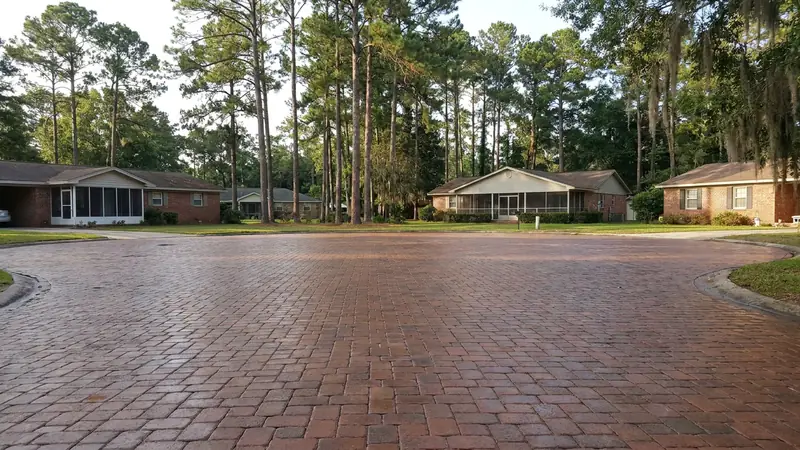
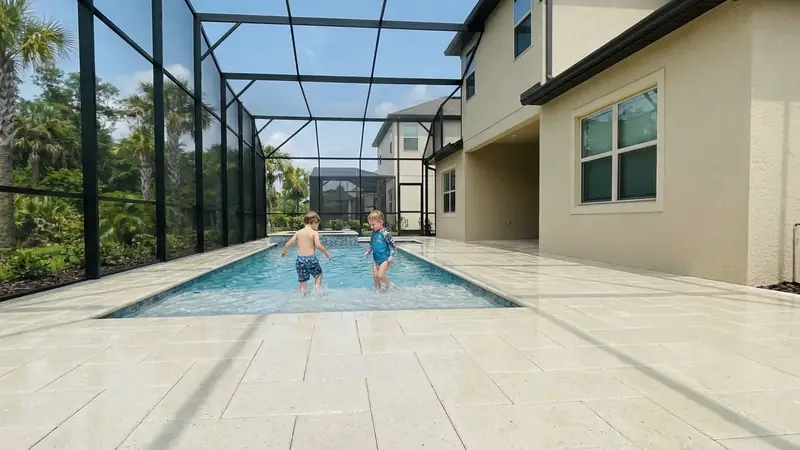
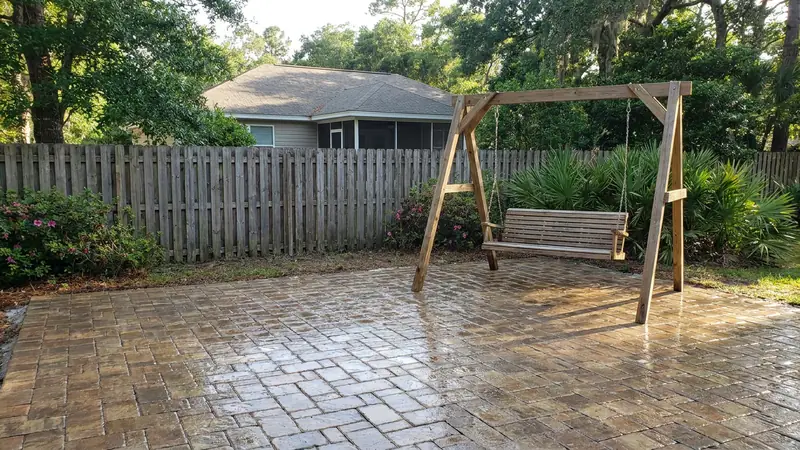
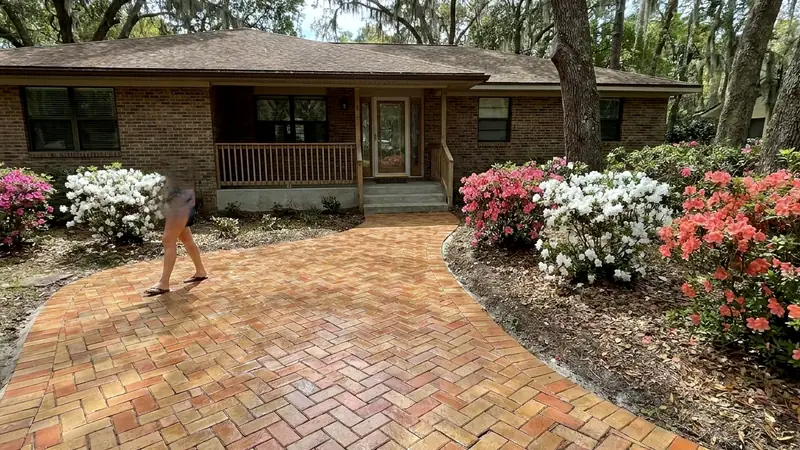
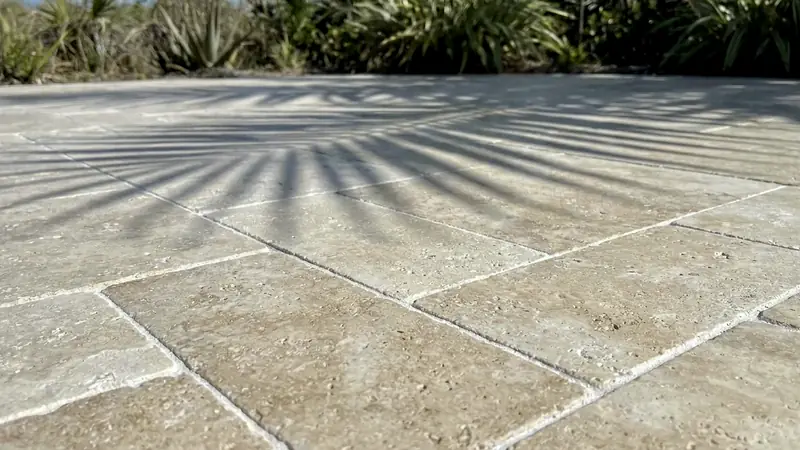
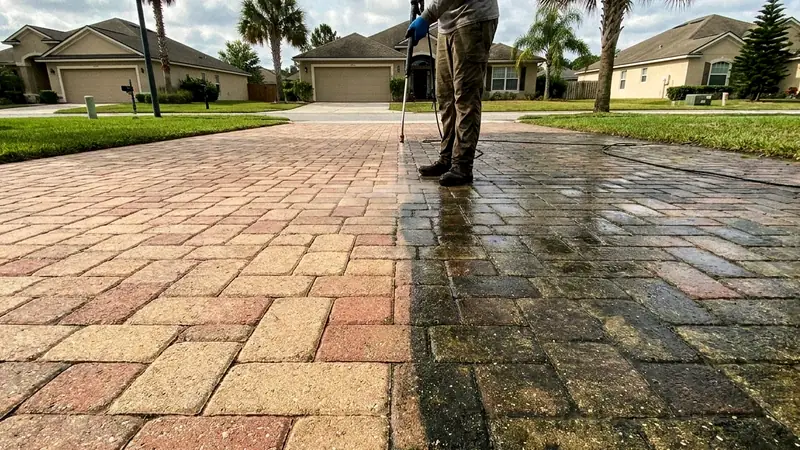
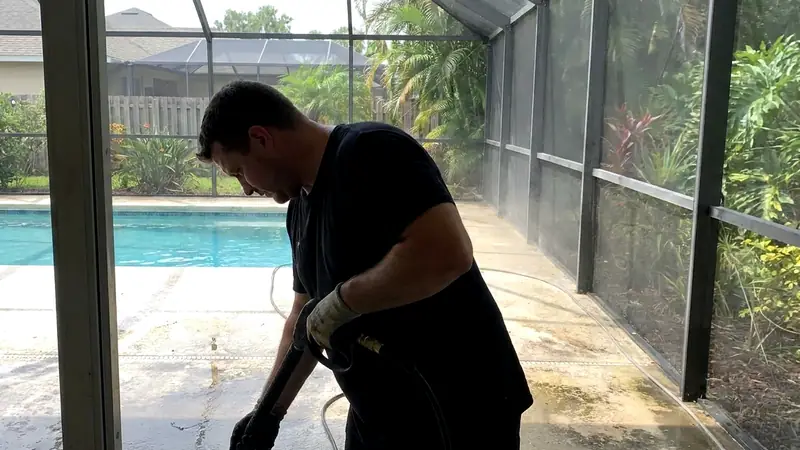
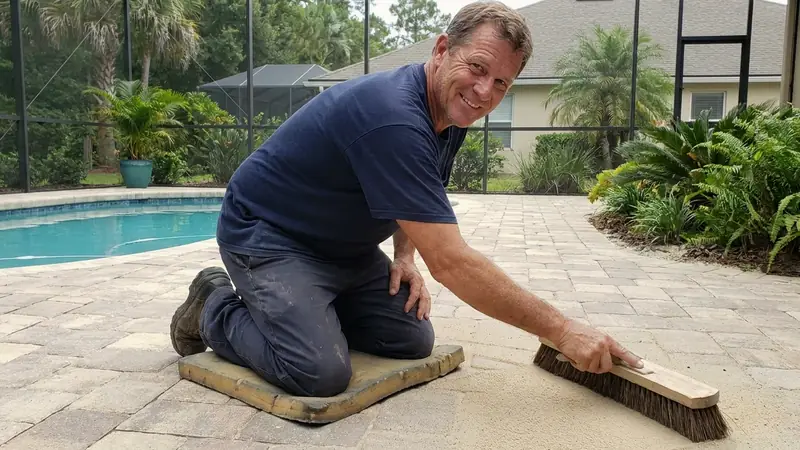
What do sealed pavers look like around Brunswick?
Why local matters in Brunswick
A contractor who knows Brunswick starts with the water. The city is the lowest in Georgia, and flat lots drain slowly, so a patio may stay wet after storms. That tells the crew how long to wait before sealing. To reach someone who covers Glynn County, call (912) 600-8118.
Local crews also know the trees. Live oaks shade much of Old Town, and their leaves stain pavers while their roots lift them. A contractor used to that checks for both before quoting. If an oak hangs over your drive, ask for a free estimate and mention it.
Morning humidity is the last piece. Summer mornings run near 90 percent, so a Brunswick contractor schedules sealing for the drier afternoon and keeps a backup day. That planning keeps damp pavers from being sealed. Shop around if you like, and ask for a free estimate when you are ready, with no obligation.
What should a homeowner know about Brunswick's history before hiring?
The town was laid out in 1771 and 1772 on a Savannah-style grid and named for the House of Hanover. Hanover Square, Queen Square and Newcastle Street still show that plan. Old City Hall went up in 1889 and the Ritz Theatre in 1899. If your home is near these streets, ask for a free estimate.
An electric streetcar once ran through Old Town, from 1911 to 1926, and the Torras Causeway to St. Simons Island opened in 1924. Lover's Oak, a live oak at Prince and Albany streets, is a living landmark. If your street is near any of these, call (912) 600-8118. Old City Hall and the Ritz Theatre are two of the landmarks you pass in the district.
Frequently Asked Questions
What is the average cost to seal pavers in Brunswick?
Published prices from Northeast Florida companies run $1.75 to $3.25 per square foot to clean, sand and seal. A Brunswick job lands within that range depending on green film, lost joint sand and old sealer. Ask for the area and the full scope in the quote. Old Town properties with several small areas can price differently from one large driveway. Mornings stay humid, so the job often starts after the pavers have had time to dry.
Do Brunswick pavers need sealing after power washing?
Yes, in most cases. Washing strips dirt and also pulls sand from the joints, so the surface is open and exposed afterward. The sand is replaced and the coat goes on once the pavers are dry. Ask your contractor to explain the order of work. A bead test later shows if the coat still works. That order protects the coat from trapped dirt and moisture.
Is it a good idea to pressure wash pavers in Brunswick?
A wash clears algae, oil and tannin stains, which is why every sealing job starts with one. Pressure and method should suit the pavers, since too much force can scar the surface. The contractor chooses both and explains the plan at the estimate. Old Town brick walks need a gentle approach, with low pressure and short passes.
How long before paver sealer can get wet in Brunswick?
Cure time follows the sealer chosen and the weather that week. Ask the contractor for the cure time in writing. Humid mornings and afternoon thunderstorms can stretch it, so a Brunswick crew often seals later in the day and watches the forecast. Weekday afternoons often work well here, since pavers are drier.
Is sealing a patio a good idea in Brunswick?
Often yes. Brunswick air is humid, and shaded patios stay damp and grow algae. A clean, sealed surface is easier to keep tidy and holds its color longer. A free look at your patio is the quickest way to tell whether it needs one. A patio near a river-facing wall may stay damp longer than one in open sun.
Does river and marsh air change how pavers age in Brunswick?
Moisture is the main effect. Brunswick sits on a peninsula with rivers on three sides and salt marsh to the east, and summer mornings run humid. Damp, shaded pavers grow algae sooner, so they need washing more often. The contractor can tell you how your lot's sun and drainage change that.
Do I need approval to seal pavers in Old Town Brunswick?
It depends on your address. Old Town is a National Register district, and local rules may apply to exterior work. A short call to the city before work starts can settle it, and the contractor can wait for the answer. Mention the National Register status when you call, since it is the first thing staff will ask about. Ask the city whether your block has special rules for exterior work.
Can I seal a Brunswick driveway if I do not know what is on it?
Yes, though the contractor must find out what is on it before choosing. A water-based product will not bond over a solvent-based one, so the old coat decides what goes on top. A small test patch can show how the surface reacts, and any old receipt or product name helps. Photos of the surface and any labels or receipts help.
How often should Brunswick pavers be sealed again?
Per coat, companies commonly quote two to five years of wear. Shade, tires and humidity push a surface toward the short end. Brunswick's humid air and shade can push a coat toward the short end.
What time of day works for sealing pavers in Brunswick?
Afternoon is often the practical choice. Summer mornings in Brunswick average nearly 90 percent humidity, so dew keeps pavers damp, while afternoons average nearly 60 percent. A contractor can confirm the pavers are dry before the first coat. Ask the contractor to confirm the surface is dry before the first coat.
Does low ground in Brunswick change how pavers are sealed?
It can. Brunswick sits 10 to 14 feet above sea level, and flat lots drain slowly. Water can hide in low corners and joints, so the contractor checks for damp spots and waits. Tell the crew where water stands on your property. A low corner may need an extra day of drying.
How long does sealing take in Brunswick's humid weather?
Plan for the work to stretch a little. Dew and humid mornings delay the start, and afternoon thunderstorms can interrupt. The contractor usually washes and re-sands first, then seals once the surface is dry. Ask for a backup date when you book, so a rain delay does not cost you a second wait.
Ready for a Free Estimate in Brunswick?
Call (912) 600-8118 and tell us about your pavers.
Free, no obligation